Heat-related workplace injuries are prominent in industrial environments where stagnant air pockets are present. The buildup of this trapped air creates dangerous environments where workers face a greater risk of heat exhaustion, reduced cognitive function, and dehydration. Industrial HVLS fans (high volume, low speed fans) provide powerful air circulation, designed specifically to combat risk factors in these environments.
One HVLS fan replaces 20-30 smaller fans while saving up to 15% on energy costs. These fans create a laminar airflow pattern to move air more effectively across large spaces with a low decibel output and comfortable breeze flow. Commercial and industrial fan layout systems are designed with the importance of OSHA (Occupational Safety and Health Administration) Standards and Heat-Related Injury Prevention in mind, ensuring maximum worker safety. Integrating the proper airflow system in your facility directly influences how insurance carriers assess work conditions and make coverage decisions.
The Dangers of Stagnant Air in the Workplace
In environments with inadequate air circulation, traditional airflow systems pose several safety risk factors to workers. OSHA requires employers to provide working conditions “free from recognized hazards,” which includes exposure to excessive heat. Employers are required to recognize signs of heat stress and install a proper airflow system to suit thermal comfort levels. HVLS fans are engineered to counter these hazards by generating focused airflow patterns through a destratification process.
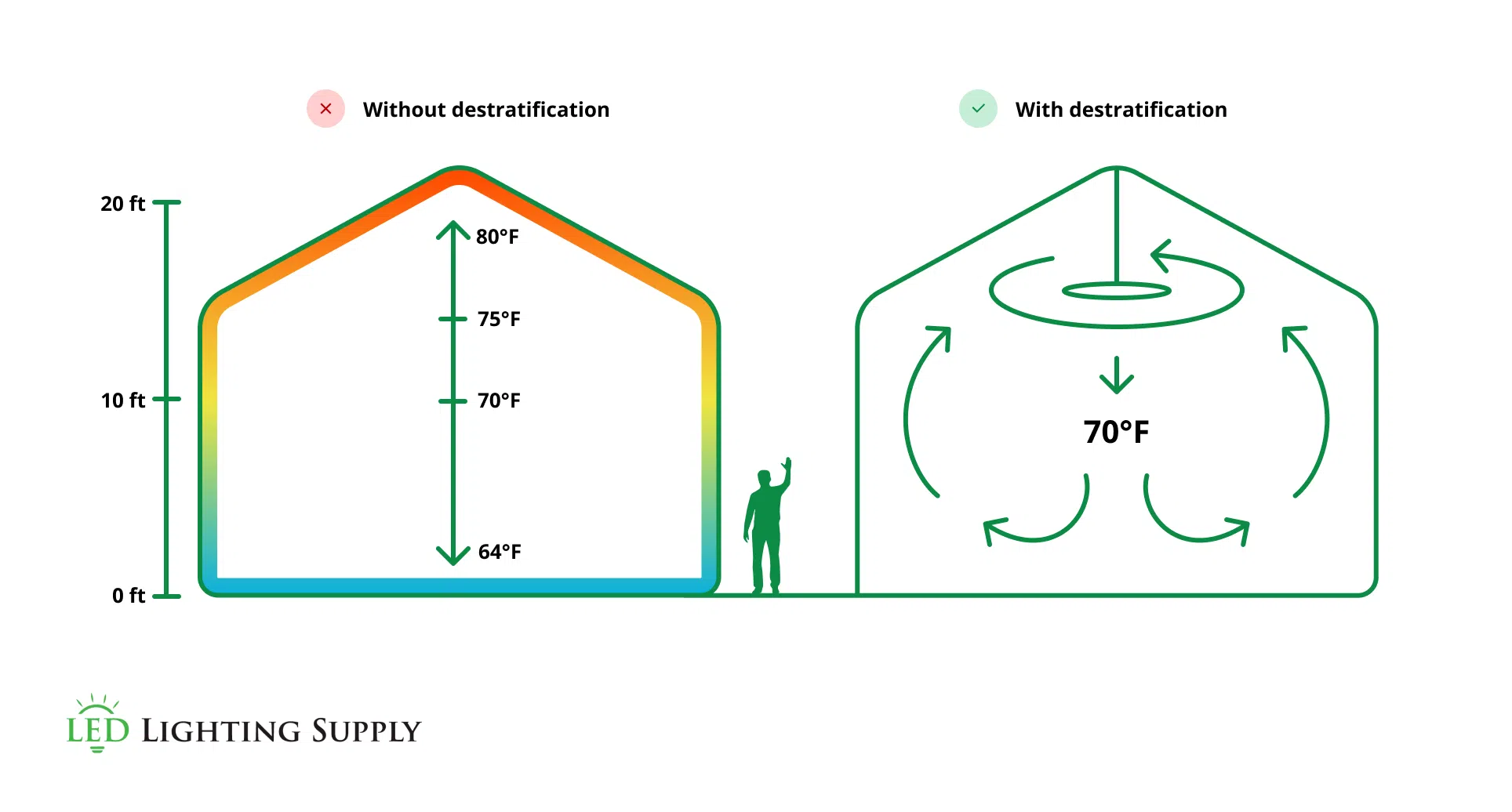
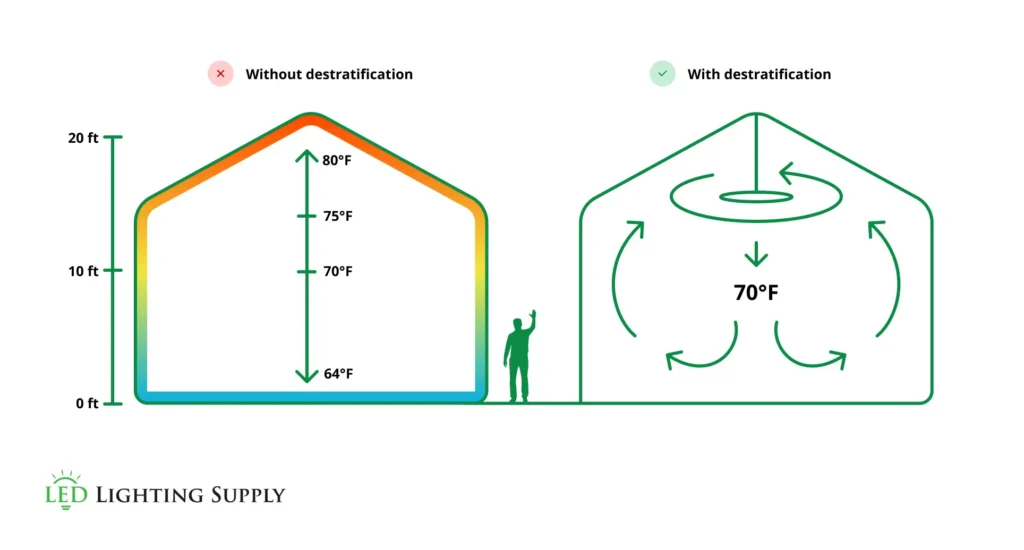
Destratification occurs when warm air rises and cool air sinks, creating marginal layers of separation in enclosed spaces, especially high-ceiling facilities. The powerful airflow of HVLS fans continuously circulates these layers, helping to blend cool and warm air from the floor to the ceiling. This process limits the rise in core temperature and reduces the risk of cardiovascular strain, while improving worker comfort. The airfoils of HVLS fans are designed to effectively eliminate particles of dust, fumes, and airborne contaminants, preventing the spread of airborne illnesses and toxins. Unlike traditional HVAC systems, industrial fan installation will circulate large volumes of air efficiently to save on energy consumption and maximize ROI.
Supporting Policy Enforcement
Policy enforcement in industrial environments sets the standard for temperature thresholds that could trigger the need for additional fan operation. Facilities with comprehensive fan-based air circulation generally benefit from three-level policies addressing both routine work practices and emergency response. Heat illness prevention policies involve establishing work-rest cycles during extreme heat and documenting fan maintenance requirements, ensuring continuous airflow. Fan System documentation outlines equipment operability, detailed measurements, and more to support policy enforcement.
A fan layout assessment will provide the technical specifications needed for policy documentation and provide optimal air circulation throughout work zones. Training logs detail how these operations work and workers’ responsibility to recognize heat stress symptoms. Training logs should include fan operation procedures, safety clearances around rotating blades, and protocols for possible fan malfunctions.
Employers should be educated on the specifics of their airflow system so that they can inform their workers and collaborate to minimize the likelihood of these symptoms. Pay/No pay workflows in industrial environments can refer to a conditional step within a workflow where a decision is made based on certain criteria.
The Impact of HVLS Fans on Insurance Carriers’ Workplace Evaluations
When insurance carriers evaluate workplace environments for meeting the correct standards, having documented fan systems provides evidence of proactive risk management while demonstrating proactive safety measures. This record-keeping process also helps to identify and eliminate any existing workplace hazards, which can help prevent any workplace injuries from happening in the future.
Steps to Ensure Favorable Outcome Resolutions and Premiums:
- Keep clear records of heat mitigation equipment and equipment maintenance history
- Define an organized workplace safety plan accessible to all employees
How HVLS Fans Protect Against Heat Stress, Workplace Injuries, & Save on Energy Costs for Facilities
The World Health Organization predicts 2-3% of working hours are lost each year due to heat stress (World Health Organization, 2025). Facilities that utilize commercial and industrial fan solutions maximize productivity, limit safety hazards and workers’ compensation claims, while maximizing ROI. When used in conjunction, industrial fan systems can reduce HVAC costs by 30-40% in the summer and 20% in the winter (LED Lighting Supply, 2026).
Fan placement is dependent on the facility dimensions, building layout, structural obstructions, operation requirements, thermal loads, air patterns, and ceiling height. Industrial ceiling fans that are 12 feet or more in diameter require a 14-foot ceiling height for safe clearance and proper air circulation. With the right setup, the system will work in conjunction with the existing HVAC supply and return locations, thereby preventing disruption to established air circulation patterns.
The proof that integrating a professional fan placement provides valuable benefits in the workplace can be noticed through the reduced injury/stress rates, energy cost savings, and layers of regulatory compliance performance. Overall, these combined advantages clearly demonstrate that professional fan placement is not only a practical investment but a strategic approach.
About the Author
Brianna Sapienza is a Content Marketer at LED Lighting Supply with over four years of experience creating educational content for the industrial sector. She specializes in SEO-driven content strategy and develops practical, jargon-free resources that simplify complex lighting, fan, and pole topics. When she’s not writing, Brianna enjoys reading, staying active, traveling, and spending time with family.
LED Lighting Supply is a commercial, industrial, and sports project lighting, fan, and pole manufacturer and supplier. They partner with their customers to ensure the perfect solution for your project with exceptional product and post-purchase support. LED Lighting Supply’s Product Specialists can provide a fan layout plan with product recommendations at no extra cost to ensure the requirements of your space are met.
References:
Billy for Insurance. “Heat Illness Prevention in the Workplace: A Compliance Guide.” (16 Dec. 2025). Billy for Insurance. https://billyforinsurance.com/resources/heat-illness-prevention-workplace/
Bone, Angie, et al. “Fan-First Heat-Health Protection.” Medical Journal of Australia, vol. 222, no. 11, pp. 538–541. (23 Apr. 2025). PubMed Central. https://pmc.ncbi.nlm.nih.gov/articles/PMC12167609/
LED Lighting Supply. (n.d.). LED Lighting Supply. https://www.ledlightingsupply.com/
Occupational Safety and Health Administration. Heat ‒ Personal Risk Factors. U.S. Department of Labor. (n.d.). OSHA, U.S. Department of Labor. https://www.osha.gov/heat-exposure/personal-risk-factors
Occupational Safety and Health Administration. Recording. (n.d.). OSHA, U.S. Department of Labor. https://www.osha.gov/recordkeeping/recording