
Modern Construction Risk Management Starts With Better Compliance
Brown & Brown of Central Florida brings construction insurance and risk management expertise. Billy gives construction teams the technology to automate vendor compliance, verify certificates of insurance, and manage risk throughout the project lifecycle.
See How Billy Helps Construction Teams Manage Compliance
Construction teams should not have to chase certificates, review every document by hand, and track vendor compliance across spreadsheets and email. Here is what it looks like when the whole process runs as one connected workflow.
Construction Insurance Does Not End When the Policy Is Issued
Placing the right program is the first half of the job. The second half runs for the life of every project: making sure each subcontractor actually carries what the contract requires, and still carries it in month nine.
That work is where exposure quietly accumulates. A certificate arrives without the endorsement the contract called for. A policy renews at a lower limit and nobody looks. A crew mobilizes on Tuesday and the certificate clears the following Friday. None of it shows up in the placement file. All of it shows up in a claim.
Every item listed below is a separate thing to collect, check, and watch, on every vendor, on every project.
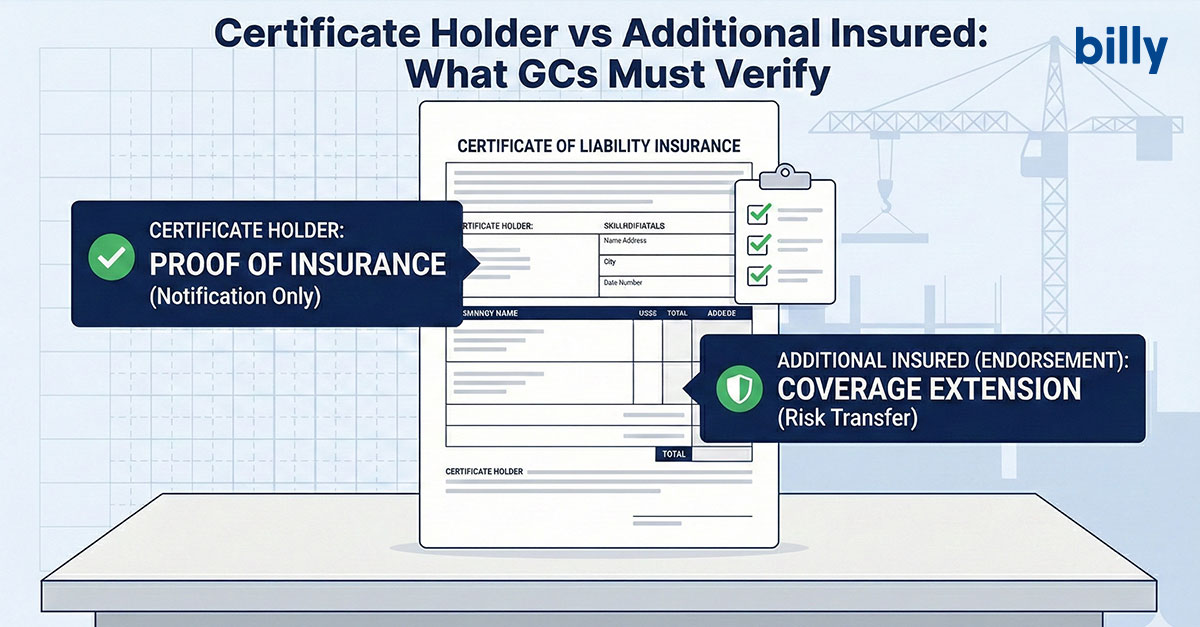
Certificate holder is not the same as additional insured
This is the distinction that costs general contractors the most. Being named certificate holder means you get told the policy exists. Being named additional insured, by endorsement, is what actually extends the coverage to you.
A certificate can show your company in the holder box and still leave you with no coverage at all. Verifying that the endorsement exists is the whole job.
AI That Catches Compliance Issues Before Your Team Has To
This is the feature customers bring up without being asked. Billy reads a certificate of insurance in seconds, compares it against the requirements on that project, and flags what is wrong.
It also tells the vendor what to fix and why, in plain language they can forward to their broker. Most bad certificates get corrected before a compliance reviewer ever opens one.
“Adding a team member without the hiring.”
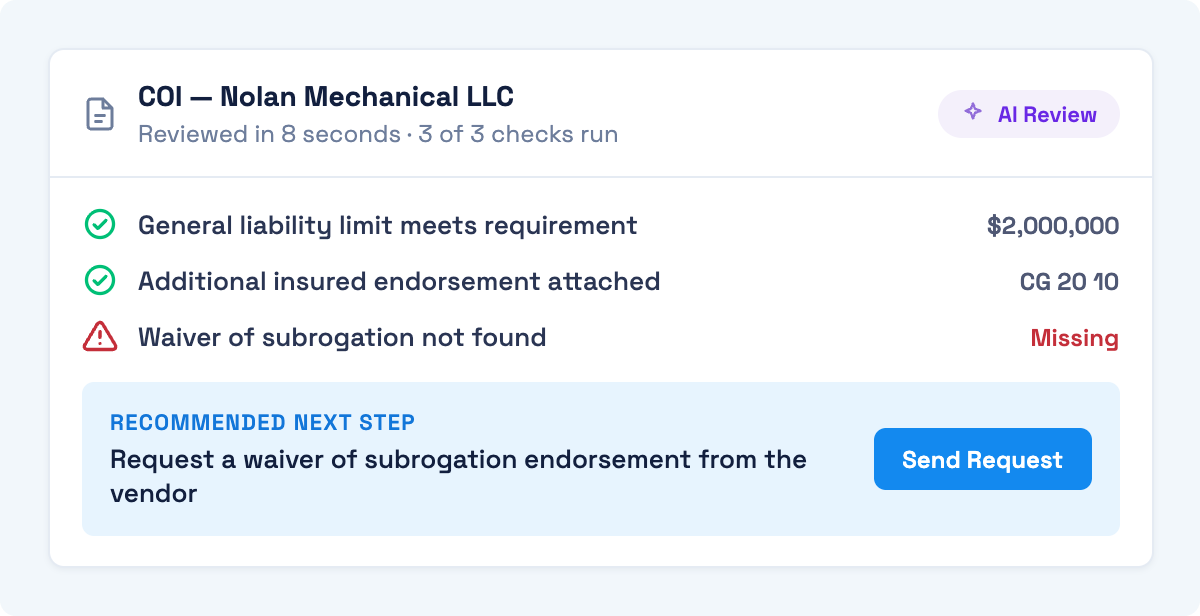
Read more about the Billy AI Review Assistant.
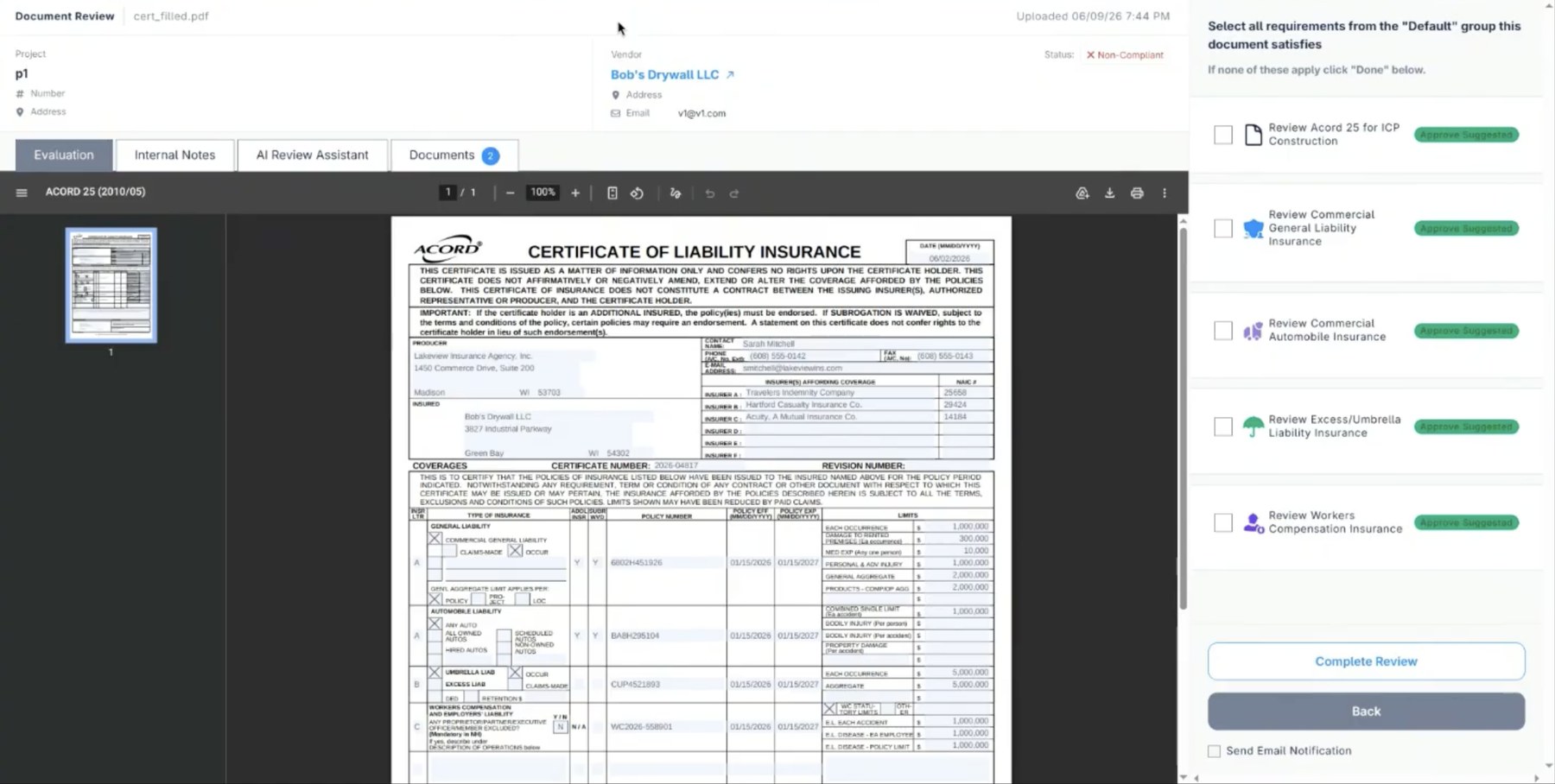
From Contract to Compliance to Payment
Certificate tracking is usually treated as an administrative task that sits off to the side. It is actually one link in a chain that starts with the contract and ends with a payment. Billy connects the chain so compliance status travels with the vendor instead of living in a separate file.
More Than Certificate of Insurance Tracking
Billy is a vendor compliance platform. Certificates are the most visible piece, but they are one document among many that a construction team has to hold on every vendor.
Business Licenses
Tracked with the rest of the vendor file.
Surety Bonds
Held against the projects that require them.
Warranty Documents
Kept with the vendor rather than in a folder.
Master Service Agreements
Executed and stored alongside compliance status.
Evaluate Vendors Before Risk Reaches the Project
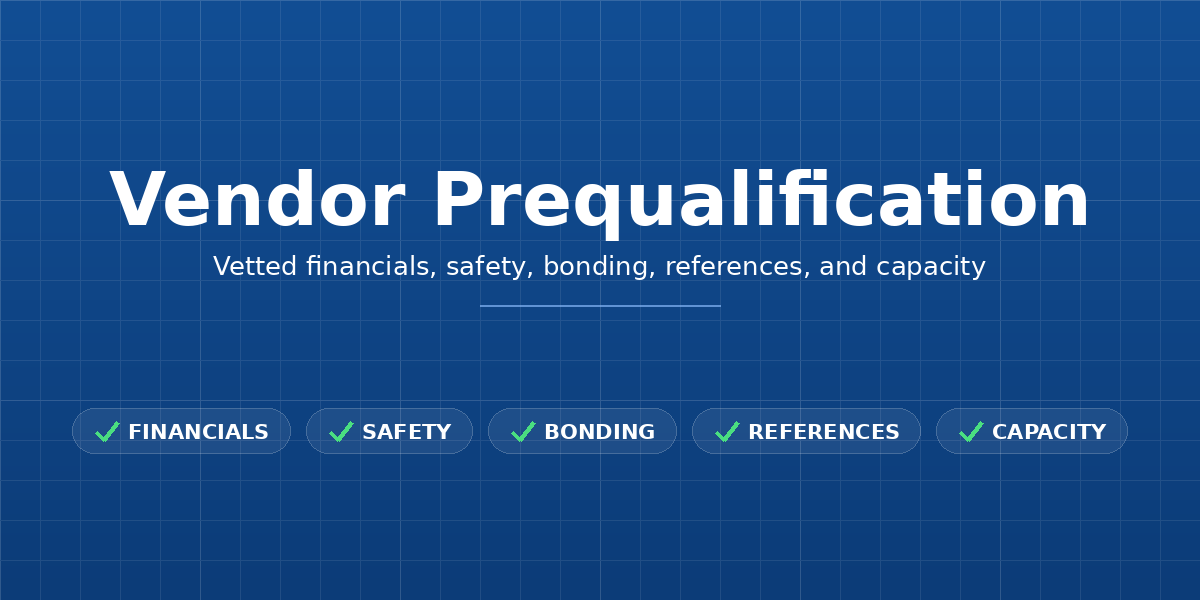
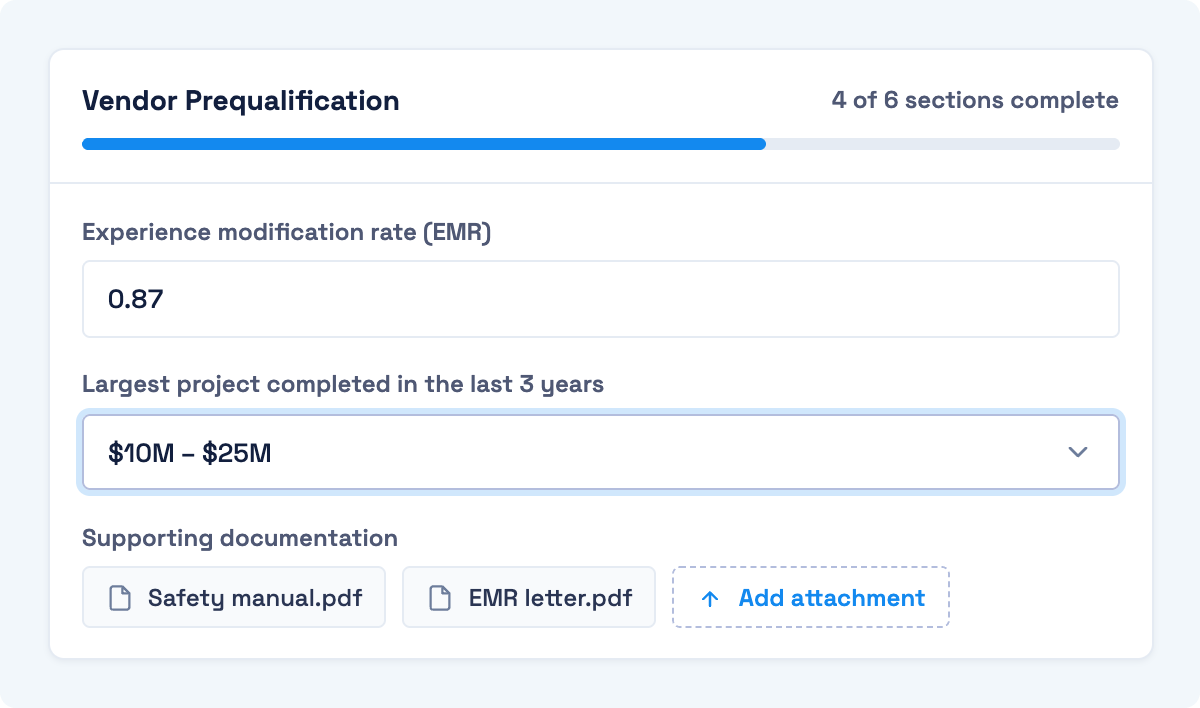
The cheapest moment to say no to a vendor is before you award them work. Prequalification moves the evaluation ahead of the decision that creates the exposure, instead of documenting a risk you have already accepted.
Billy hosts the questionnaire as a form you embed on your own website. Vendors complete it without creating an account. Submissions arrive in one place where your team can approve, decline, or hold them for a future project, and the approved vendor becomes the same record compliance keeps using.
Connected to the Construction Technology Stack
Billy does not create another silo. It connects compliance to the systems construction teams already use, so a project manager and an AP clerk see vendor status without opening a compliance tool.
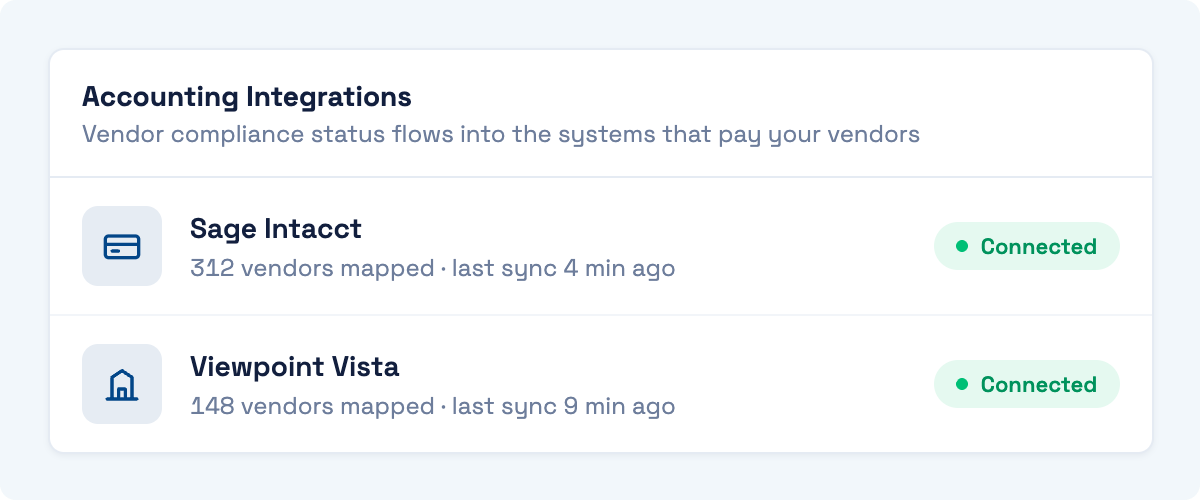
Billy also connects to CMiC, Sage 300 CRE, Oracle JD Edwards, Acumatica, and DocuSign. See every integration.
Insurance Expertise Meets Compliance Technology
Two separate companies, two distinct roles. The combination matters because good insurance requirements are only worth what your ability to enforce them is worth.
Brown & Brown of Central Florida
Construction insurance and risk management expertise. Program design, coverage structure, and the contractual requirements that define what every vendor on a project has to carry.
Billy
Technology for collecting, reviewing, tracking, and managing vendor compliance. The layer that turns those requirements into something a team can actually enforce at scale.
Better insurance requirements, better technology, better execution.
Brown & Brown of Central Florida and Billy are independent companies. Brown & Brown does not operate Billy, and Billy does not provide insurance advice, brokerage, or coverage recommendations.
Tom D’Avanzo
Tom works on construction and real estate risk, including Builder’s Risk, OCIP, CCIP, and large commercial insurance programs. He holds CPA and CPCU credentials, which is an unusual combination and a useful one when the conversation moves from coverage structure to how a finance team will actually run it.
If you were referred here by Tom, the demo below is the fastest way to see what he has been describing.
Connect with Tom on LinkedInThe amount of hours spent by our admin staff on insurance compliance and chasing has been cut by more than half.
Built for Construction Companies Managing Compliance at Scale
General Contractors
Manage compliance across hundreds or thousands of subcontractors and vendors.
Developers
Hold insurance and compliance requirements consistently across projects and vendors.
Risk & Insurance Teams
Get real visibility into exceptions and vendor risk instead of a status spreadsheet.
Accounts Payable
Connect compliance requirements to vendor setup and payment workflows.
Construction Compliance for Florida’s Growing Construction Market
Florida runs a lot of concurrent work, and the vendor bases are large. A general contractor active across Central Florida and Orlando, then into Tampa, Jacksonville, and South Florida, is not managing one vendor list. It is managing overlapping lists with different project requirements, different owners, and different insurance obligations on each job.
Volume is what breaks a manual process. A compliance coordinator can hold forty vendors in their head and a spreadsheet. At four hundred, across a dozen active projects, the spreadsheet stops being the source of truth and quietly becomes a second one. That is usually the point at which a team goes looking for software, and usually a little later than they should have.
Billy is built for that scale, whether the work is in Orlando or spread across the state.
Make Construction Compliance Easier
See how Billy helps construction teams automate certificate tracking, vendor compliance, and insurance verification, while connecting compliance to the systems they already use.
Common questions
What is construction compliance software?
Construction compliance software collects, verifies, and monitors the documents that prove a vendor is qualified to work on a project. That includes certificates of insurance, endorsements, W-9s, business licenses, bonds, warranty documents, master service agreements, and lien waivers. The stronger platforms also connect that status to the project management and accounting systems a team already uses.
How does Billy track certificates of insurance?
Billy holds the insurance requirements for each project and vendor, collects certificates through a link that requires no vendor login, checks each one against those requirements, and monitors expiration dates so a lapse is caught before it becomes a gap in coverage.
How does Billy use AI to review COIs?
Billy reads an uploaded certificate, compares it against the requirements on that specific project, and identifies what is missing or wrong. It then explains the problem to the vendor in language they can forward to their broker, so most corrections happen before a reviewer on your team opens the document.
Can Billy identify missing insurance endorsements?
Yes. Billy flags missing additional insured endorsements such as CG 20 10 and CG 20 37, missing waivers of subrogation, coverage that is not primary and non-contributory, limits below the contract requirement, expired policies, and missing additional insured language on the certificate itself.
Can Billy integrate with Procore?
Yes. Billy integrates with Procore, including a side panel that surfaces compliance status inside the Procore workflow so project teams can check a vendor without opening a separate tool.
Can Billy connect with accounting systems?
Yes. Billy connects with Sage Intacct, Viewpoint Vista, Sage 300 CRE, Oracle JD Edwards, and Acumatica, so vendor compliance status is visible where payment decisions are made.
Can Billy manage documents besides certificates of insurance?
Yes. Billy manages W-9s, business licenses, surety bonds, warranty documents, master service agreements, lien waivers, and prequalification records alongside insurance documentation.
Does Billy support vendor prequalification?
Yes. Billy provides a customizable prequalification form you embed on your own website. Vendors complete it without creating an account, and your team reviews, approves, declines, or holds each submission from one place.
Who is Billy designed for?
General contractors, developers, homebuilders, and owners managing compliance across a large vendor base, along with the risk, compliance, and accounts payable teams inside those organizations.
How can a construction company get started with Billy?
Book a demo. Thirty minutes on your own vendor list and your own project platform will tell you more than any overview, and if Brown & Brown of Central Florida referred you, mention it so the conversation starts in the right place.
More on how this works in certificate of insurance tracking, or browse the resource library.